Tuesday, July 21, 2009

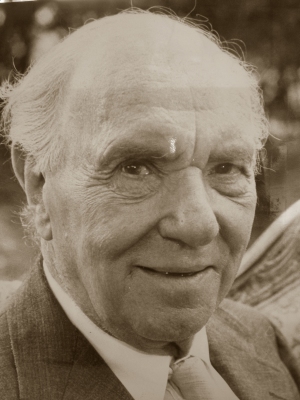
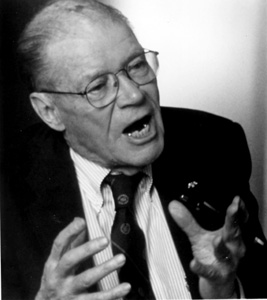
Coming in Threes: Walter Cronkite (1916), Robert McNamara (1916), and Frank McCourt (1930)


You might be able to call this the Blog of Death in the future. I write with passion about Walter Cronkite and his legacy, and Cronkite passes away the next day. Man, I hope all those British actors I mentioned yesterday are in good health.


But seriously, folks...


Walter Cronkite was the voice of authority for my parents, and their parents. In my studies of the media, he is one of only a few figures whom no one ever disparages or accuses of giving less than the best. In my mind, he represents an era I sorely wish I could have lived through, when the news was about how other people were making decisions which affected the country and the world, and Cronkite was telling us HOW these actions were going to play a role in OUR LIVES without being condescending or pandering or fearmongering. The news has undergone a profound evolution from the days of Addison and Steele to the 24-hour network and the blog. Cronkite was one of the keys in the greatest transitional period. He spoke to the masses, and always spoke with heart as well as mind, but he never lost sight of how the news was meant to inform and challenge and be a way for the people to speak out to those wielding decision-making power, for or against. I can never conceive of Cronkite speaking about the Gosselins or the O.J. Trial. NEVER.


Most of my firsthand exposure to Cronkite came through secondhand stories and snippets in documentaries...the JFK death announcement, the condemnation of Vietnam, the detailed reporting of Watergate, even spreading word that four Liverpudlians called the Beatles were going to change the entertainment world forever. But I'll never forget being a child and watching Spielberg's animated We're Back!: A Dinosaur's Story at least ten times. Cronkite played Professor Neweyes, the symbolic representative of all that was best in humanity, the believer and the dreamer...it was a role few others could have enacted with similar conviction.


Five years ago, I read a chronicle of CBS News in the eighties and received one last, inspiring picture of Cronkite, as a man who was prescient enough to see how the news was changing and made a Quixotic stand for how it should be. That he would fail was a foregone conclusion, but that he still tried...


I would have believed him, too, if he said the sky was green.


In contrast, I got up close and personal with Robert McNamara through Errol Morris's brilliant, Oscar-winning The Fog of War and David Halberstam's tear-inducing The Best and the Brightest...both approach Greek tragedy, the saga of a wise, good-hearted humanist whose tragic flaw was a belief in fact and intellect over emotion...not that he discredited emotion, but it played no role the ability to make analytic decisions. On a small level, this tendency resulted in the man who took charge of Ford and made it great again to push the Edsel. On a large level, he helped bring on years of death, pain, and a division America has never recovered from in a pointless war. To McNamara's credit, he learned the "eleven lessons" well, for The Fog of War depicts that rare man who is able to judge himself and his time objectively and still be personally repentent. His story is inspirational, but as a warning...especially if you read Brightest. Prepare to shiver.


Frank McCourt to me represents the great liberal picture of an educator, a man who never stopped learning and found the connection between personal and intellectual development. I never did read Angela's Ashes, sad to say, but essays and interviews left me convinced he was a warm-hearted man with genuine curiosity for all which came his way...and his brother Malachy appeared in The Mollie Maguires, a personal favorite of my Dad's.


All three will be missed.

Monday, July 20, 2009

Harry Potter: Wishful Thinking

!)
Sir Ralph Richardson: He was Dumbledore before we knew who Dumbledore was.


Five seconds of thinknig while doing crunches at the YMCA this morning launched an epic flight of fancy.

I was ruminating on the latest immense success for the Harry Potter film cycle, kind of wondering what Michael Tabb thinks because he loves the movies and really does not enjoy Sir Michael Gambon as Dumbledore, when I suddenly thought, Dumbledore is sort of like Sir Alec Guinness as Obi-Wan Kenobi, especially when Harry is so close to Luke Skywalker.


Then I corrected myself, but suddenly a new thought entered my mind. Star Wars came out in 1977. What if Guinness could have played Dumbledore back then? What if J.K. Rowling wrote the books twenty-five years earlier and the British film industry had made the movies between 1977 and 1984, one film a year?


Imagine a Potterverse with real locations in the U.K. and practical, classic-Lucas-and-Ghostbusters effects. And if the let's-cast-everybody-in-England mentality was still there...my mind was really racing now. Imagine the talent who could have made the Potters in that era!


What follows is my dream line-up for an imagined 1977-1984 Harry Potter film cycle (again, one film a year with Deathly Hallows split in two). And believe me, I'm tempted to go back and read all the books again RIGHT NOW so I can imagine them playing out this way.


I'm a geek, I know.


DIRECTORS: Peter Yates for the first two, Sir Richard Attenborough for the last three, and for the middle, experimental/transitional ones, take your pick: John Boorman, Peter Greenaway, Derek Jarman, Ken Russell.

WRITERS: Either Robert Bolt or Christopher Hampton could have kept the Rowling atmosphere and storytelling while knowing exactly how to adapt and what could go.

MUSIC: John Williams was in his prime...but I'd go with John Barry, halfway between the "007 inensity" and the "Oscar-winning epic lushness" stages of his career.

CAST

Harry, Ron, Hermione, et al: unknowns, just like now (These were always roles to MAKE you famous, not for the famous. Same principle Milos Forman used when he cast F. Murray Abraham and Tom Hulce in Amadeus.)

Albus Dumbledore: Sir Ralph Richardson (The grandfatherly bearing, the very good-natured wit, and the steeliness which lets you play Pinter...he always should have been Dumbledore.)

Minerva McGonagall: Glenda Jackson (She already looks like a cat.)

Severus Snape: Richard Burton (Okay, I'm prejudiced, since he IS my favorite film actor of all time, but he was younger than Alan Rickman...and imagine those deep, poetic, Welsh tones giving life to Snape both venomous and tender.)

Lord Voldemort: Anthony Hopkins

Sirius Black: Sean Connery

Remus Lupin: Michael Caine

Mad-Eye Moody: Nicol Williamson (Remember, he was Merlin in Boorman's Excalibur, and anyone who ever saw his eyes at their most intense knows EXACTLY what I mean.)

Rubeus Hagrid: Oliver Reed

Horace Slughorn: Lord Laurence Olivier

Nymphadora Tonks: Jenny Agutter

Aberforth Dumbledore: Sir John Gielguld

Mr. Ollivander: Sir Alec Guinness (had to keep him in there, and it would have been just before Star Wars)

Lucius Malfoy: Edward Fox

Narcissa Malfoy: Maggie Smith

Bellatrix Lestrange: Helen Mirren (the younger, amazingly even sexier Helen)

Gilderoy Lockhart: Peter O'Toole (Imagine that! :))

Cornelius Fudge: James Mason (the drawl...so perfect for a politician)

Dolores Umbridge: Vanessa Redgrave (She would have been in her mid-forties and ready to send up Margaret Thatcher.)

Vernon Dursley: John Cleese

Petunia Dursley: Prunella Scales (bringing back the Fawltys)

George Weasley: Donald Pleasance (He could play the timid bureaucrat and get bullied by stronger people.)

Molly Weasley: Patricia Routledge (again, almost perfect casting)

Peter Pettigrew: David Jason

Xenophilius Lovegood: Christopher Plummer (the storytelling voice)

Armando Dippet: Sir Michael Hordern

Tom Riddle: Daniel Day-Lewis

Argus Filch: Sir John Mills

Rufus Scrimgeour: Trevor Howard

Quirinus Quirrell: Peter Sellers

Rita Skeeter: Julie Christie (She married a journalist!)

Sybill Trelawney: Judi Dench

James Potter: Jeremy Irons

Lily Potter: Meryl Streep (with good accent)


I spent forty minutes making this list...and I'm not calling it wasted time :)

Leaving Rostanworld and Celebrating Marc


Man of the 72 Hours


So, I should write some things about Marc since we were celebrating him this weekend, but I know Marc, and I know he wouldn't want a lot said about him, so I'm going to keep it short.


I've always loved Marc, but when he was born and for many years afterward...I didn't like him. I wasn't too comfy as a big brother, I got easily irritated playing with him, and he pinched my arms when he got mad to the point where I was covered in scars and my elementary school teachers thought I was being abused.


Then we both got older and I realized how special Marc is. People think I'm creative...I have nothing on him. We used to sit together in the basement for two hours at a time while he would spin elaborate stories of fake countries, TV networks, bands, sports teams, politicans and religious leaders, entire civilizations and cultures from out of nowhere, fueled by an immensely curious mind.


Last night at his graduation party (before he heads for Ohio State to study political science...for now...) I was looking at all the awards and honors he received in Boardman: top sixteen in the Ohio State Speech and Debate, Homecoming Court, Editor of the Bugle and AMAZINGLY FUNNY columnist (I need to share "The Cynic's Guide to a Boardman Education" with my friends)...and I felt a little sad I wasn't there to see it all happen...but mostly so happy and so full of love that he accomplished even more than me.


He's smart, handsome, and has enough friends to rival George Bailey. He's going to do amazing things in the future, no matter what. And I know he'll kick my ass if I keep on writing about him, so now it's time to talk about the weekend.


Marc's the last of our generation of Rostans, so this gave us an excuse for a big family get-together. Not that we ever need much of an excuse to share a weekend of eating and drinking to the point where I gain three pounds easy as pie...and love every minute of it, except for a few minutes on Saturday when my "try everything once" attitude landed me with a killer stomachache.


Six of the eight siblings were here, except for Aunt Mary and Uncle Donald. And selfishly, it was sort of the best homecoming I could have wanted because it was so great to see everybody, and nobody ever changes.


Uncle Tom walks around with booming voice (and boomier chest) declaring how Obama and the Communists and liberals will ruin America, light the flame for the Bananas Foster, and lock his keys in the car, forcing Dad to drive to the Travelodge to help him get them while Aunt Angie (wife number three, as tiny and quiet as he's big and loud) only smiles and sighs. Uncle Frank takes charge of champagne and tries to pay for everything. Aunt Susie gushes over everyone and tends to CC, the most adorable dog in the world. Uncle Bill shares stories about community theatre and Aunt Candy talks up a hurricane. Aunt Nancy and Uncle Joe bustle around their home, cooking the food and mixing the drinks and being the great mother and father to us all. Uncle Richard and Aunt Jodi are yelled at for not coming to anything but Marc's party because they drive in from North Carolina and Uncle Richard, as always, is too tired. John Paul and Diana stay with us...Diana works out in the mornings, too, and they both give me advice on graduate school. Mom laughs long and loud and does her best to help out. Dad makes martinis and shoots 101 when I caddy for him at Avalon Lakes, but we enjoy every step of the spoiled walk. Maureen's son Marc the younger plays catch, shares every intimate detail of his life, and squirts whipped cream in our mouths.


New additions. Michael's fiancee Kate, a fantastic cook and even more fantastic woman (she's sending me recipes), gives us a peek at her wedding dress. I suggest "All the Way" when she frets about choosing a Sinatra song for the dance. (I can tell Aunt Nancy's having a ball right now.) Both of them, who work for OSU, share important tidbits with Marc...I always looked up to Mike as an older brother and love seeing him happy...and around Kate, he talks a little more than usual. Michelle brings home her new boyfriend David, a heck of a guy who takes it in stride when Marc kisses his hand and asks him his opinion on gays (as a Texas native)...in the first minute of meeting him. The Rostans do not mess around.


We eat Belleria pizza and Handel's ice cream the first night, sausages and burgers with homemade salads (including my black-eyed peas) and baked beans the second, and MVR catering for Marc's party. There's beer, wine, champagne, Hendrick's Gin, and sangrias courtesy of Kate and Michelle, plus Diet Coke. No wonder I get a tummyache. But it's the most beautiful pain you can go through.


And watching over us all is Grandma--Kathryn--88 next month and still sinking 25-foot putts and holding sway over her children, even those above 60.


I have many blessings in my life, and the greatest is that God gave me my parents and my brother and a family whom I would charge up a hill full of anti-American terrorists with an AK-47 and a hydrogen bomb strapped to my back for if ever called to do so. Marc and I are lucky men. And we're only a quarter-Irish!
Now it's over and I'm back in reality...until Thanksgiving...Christmas...Michael and Kate's wedding...and who knows what else.

Friday, July 17, 2009

Five Questions Raised by Re-Reading Paul Johnson's "Intellectuals"


1. In Byron's thirty months from arrival in Venice to a statement in September 1818, he apparently slept with 250 women, 24 of whom he could name. During this period he produced multiple works of significance, including Manfred and Childe Harold's Pilgrimage? In close reading of his poetry, would it be possible to find references or stylistic choices stemming from such prolific sexual activity, especially regarding the women he remembered?


2. For that matter, why does Johnson keep using Byron as a favorable comparison to several of the subjects of these brilliant essays? Johnson's central thesis is that intellectuals are dangerous in that they provide advice to the masses which is not usually well-thought out but because of their reputation becomes too influential for its own good...and worse, do not practice their preachings if their modes of living, habits with alcohol and illegal drugs, financial situations, and relationships with women are any indication. Byron was, as question one should prove, promiscuous with a record Boswell would have envied and meddled in politics far more than 99% of other poets...and gets a mostly free pass from Johnson. Could it be because unlike Shelley, Tolstoy, Brecht, and others, Byron lived a life of few pretensions and even more minute hypocrisy, or does Johnson have a personal regard for Byron which colors his opinion, much as some of the other essays seem too beyond the purely factual?

(This question is not meant to overly criticize Johnson, whose writings I admire and were discovered at the right time...after a year of Freshman Honors Seminars with Wendy and Sox, it was like breathing the cool mountaintop air of New Mexico to read about history and society from a standpoint miles away from liberalism.)


3. Why did the nineteenth-century dramatists usually publish their plays before attempting stage versions? The only writer for whom this might make sense is George Bernard Shaw thanks to the singular prefaces, but as many teachers and writers of screenwriting advice books have told me, there's no point writing something meant for performance and doing anything with it but try to get it performed. Expecting someone to read a public script and deciding, "Hmmm, I'll perform this!" is unrealistic.


4. In the chapter on Brecht, Johnson describes 1950-1975 being years of fundamental change for Western theatre thanks to the rise of well-financed, independent, and ambitious national companies (with state business but NOT artistic control). In Johnson's words, they performed "not only the classics but 'significant' new plays from an international repertoire." Combined with the very first sentence of the Brecht essay--"Those who want to influence men's minds have long recognized that the theatre is the most powerful medium through which to make the attempt."--I wonder...What classics were chosen, how were they presented in combination with new plays, and what did the selections convey to the audiences artistically, socially, and ideologically? And what were the motives of the company directors making the choices?


5. "Very few people emerged with any credit from the events of May 1968." How did the literary community, a group of artists whose work was based on self-expression and personal freedom, respond to the Paris uprising and its aftereffects? And why, as Johnson said, did Raymond Aron become "an outstanding exception?" Here may be one of the best test cases for Johnson's assertion of the hypocrisy of the intellectual...but a grand comparison is needed.

Period of Adjustment

Tomorrow will mark a week since I've been home, and the growing pains are finally over...I think.
Mommy in particular is overjoyed to have me back, but we had a few quarrels here and there. The trouble is that she taught me too well. I have learned to live my own life, do the things around the house which need done, eat and sleep and live as I would like to in the name of self-sufficient responsibility. In our house, with Dad and Marc usually busy, my semi-retired Mom does the majority of the cleaning, cooking, et al. So when I came home, I naturally wanted to help out, especially since they're letting me live here for fifty days rent-free.
I'm learning to see things more and more from the point of view of others, and now I understand what my behavior represents from Mom's point of view. She is grateful and happy, but it is a step to go from long periods of getting so much done on your own and not having too many people to talk to while doing it to having someone in the house eager to assist and eager to talk. We finally arrived at a great compromise today where, for a few weeks, she'll ASK for my help...and I won't keep explaining the motivations behind my actions.
Otherwise, Ohio is much the same as ever...and it's great to be home, especially when home means things you can't do or get anywhere else. Like caddying for Dad during golf tomorrow. And plenty of Handel's ice cream tonight!

As Far as I Can Throw My TV


"Good night, David." "Good night, Chet." Good night the true "fair and balanced" era of the media.

After a delicious rotisserie chicken salad last night, Dad and I were doing the dishes while watching the end of the NBC News, and a clip came on of David Brinkley in 1969 talking about the impending moon landing, how he couldn't quite believe it was happening. It wasn't poetry, but it was an emotional touch, not the phony-baloney human interest the news often offers today. Dad paused a moment when that was over and said, "After Murrow, David Brinkley was probably the best TV newsman there was."


I thought about Murrow and Brinkley and Chet Huntley and Walter Cronkite and drew a line of comparison...like the Mexican villagers with Chris Adams, Americans looked at them and saw men they could trust. I said that to Dad, leaving out the Magnificent Seven analogy.


"It was a different time back then," Dad said to me while we gathered the recycling and tended to the Japanese beetle traps. "There were only three networks and a little bit of news every night. We knew that whatever they told us was going to be important. And I'm sure they knew things like how Kennedy was philandering, but and this may have been wrong, but it was also sort of right, they didn't have to tell us that."


I'd read an essay earlier that day on the 150th anniversary of On Liberty, and a chord just like the ones Tyler mastered long ago rang. One of Mill's central ideas is that the government is here to protect our rights to near-complete individual liberty and step in only when our actions will harm or infringe on the liberty of others. Maybe that was why Huntley, Brinkley, and Cronkite didn't want to report on JFK and others' private misdeeds. They may have been imperfect human beings, but their personal lives were not affecting the good they were doing for society, so did the public really need to know?


Dad agreed with me, and so did Mom, who took it a step further. "My grandmother knew that whatever Walter said was the truth. He could have gone on the CBS News and said the grass was blue, and we'd have pointed out how green it was, and she would have said 'But Walter says it's blue.'"


I can't imagine anyone on TV or any source of print journalism I would put my trust in the way my parents and grandparents' generation trusted Huntley-Brinkley and Walter Cronkite. On the networks...Katie Couric is NOT the same. And CNN, MSNBC, Fox News...they're filling us in one every single unimportant or trivial detail to fill up a 24-hour day, and they want to break the sensational stories their ancestors never wanted to touch. And yes, we have a right to know the truth, but especially in the post-Watergate era and our desire to keep unearthing scandal, the truth has led us to an erosion of faith in politicians. That's why we fell in love with Obama and why we are now becoming disillusioned to various degrees...he seemed above the warmongerers and double-dealers and sex-obsessed Congressmen, but even having a clean personal bill of health doesn't mean he's immune from promising more than he can deliver. But the press still loves him because, again, that spotless biography stands out from Sanford, Ensign, Cheney, et al...


Worse, the networks all are biased to various degrees. On consecutive nights I heard Rachel Maddow and Bill O'Reilly comment on the latest CIA scandal. It was like having Da Vinci and Monet paint the same landscape and put the results side by side.


Print and on-line journalism have similar agendas. As much as everyone swears they're unbiased (except the ones who are proudly liberal and conservative and herald such a splintering battle cry on their front pages), it's almost impossible not to let personal moods enter your writing. Newsweek recently acknowledged this by moving from their decades-old traditional reporting format to an essay-based periodical in the Addison-and-Steele mode, or the papers Anthony Trollope described in the novels to which Jon Meacham is as devoted to as I. It's entertaining and very, very smart and informative, but at the price of kissing their last traces of impartiality goodbye.


The most impartial news source today is The Economist, and even that extraordinary paper is biased as well. But they are neither liberal nor conservative...that's the secret. They are pro-any working financial system which benefits all who labor and create under it. They'll slam America, but they'll also slam, Russia, China, the EU, and their home country.


The Murrow-Huntley-Brinkley-Cronkite era wasn't bias-free...they knew too much and could get more genuinely emotional back then. But by having only a limited time to deliver the news and choosing the information they felt we needed to here and delivering it straightforwardly without bells, whistles, and flashy human-interest sagas, and in terms any viewer could understand, they presented the news with authority. They were almost like our uncles or even fathers...I'm sure my parents watched their parents and older relatives tear up at the assassinations of the sixties, just as Cronkite did when JFK died.


They were personal but always spoke with sincere, direct, efficient reportage. Nothing else. And for trusting us to take it all in and come away with our own decisions, not needing magazines and web sites and blogs and fifty talking heads to make us think one way or another...we trusted them in return. The democratizing of the media is in many ways a good thing, but among the costs is a loss of that trust in almost every part of our existence. And that may make us the poorer for it.

Thursday, July 16, 2009

Weekend With the Rostans

So...there's some people back in L.A. who are expecting a long, LONG chronicle from me...which will be done once this weekend is over and I can slip away to the Library without excess guilt. For the next three days, the Rostans are gathering in honor of Marc's high school graduation for parties, golf, and general rioting. It's going to be a weekend to remember on the same level of San Francisco...and I'll be writing up a few of the more memorable moments on here. In the meantime, Bleak House goes on hold...but I'm in the groove, so no worries.